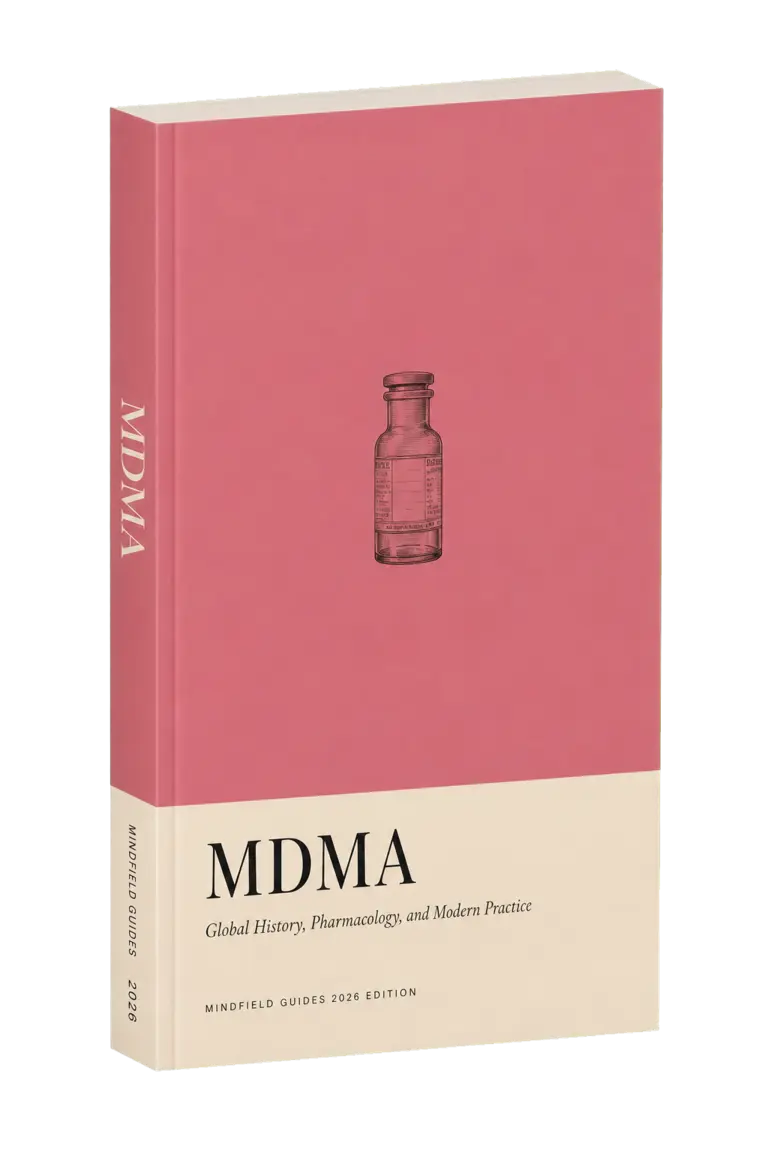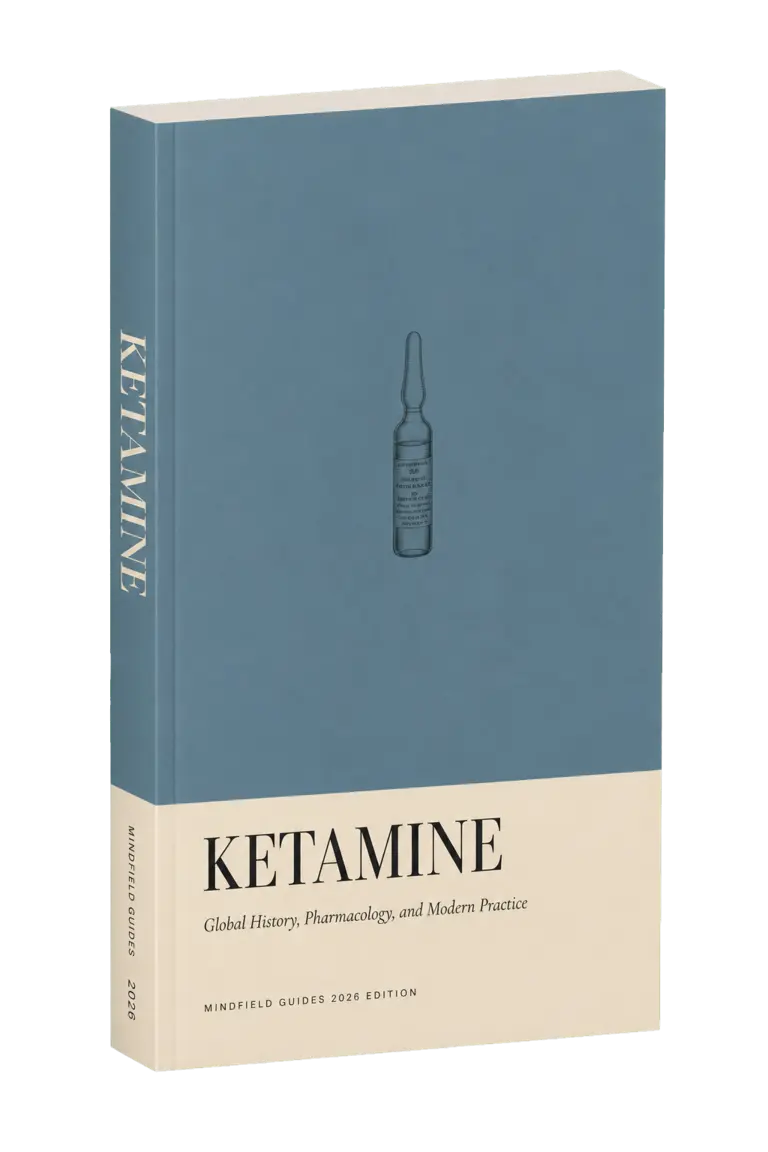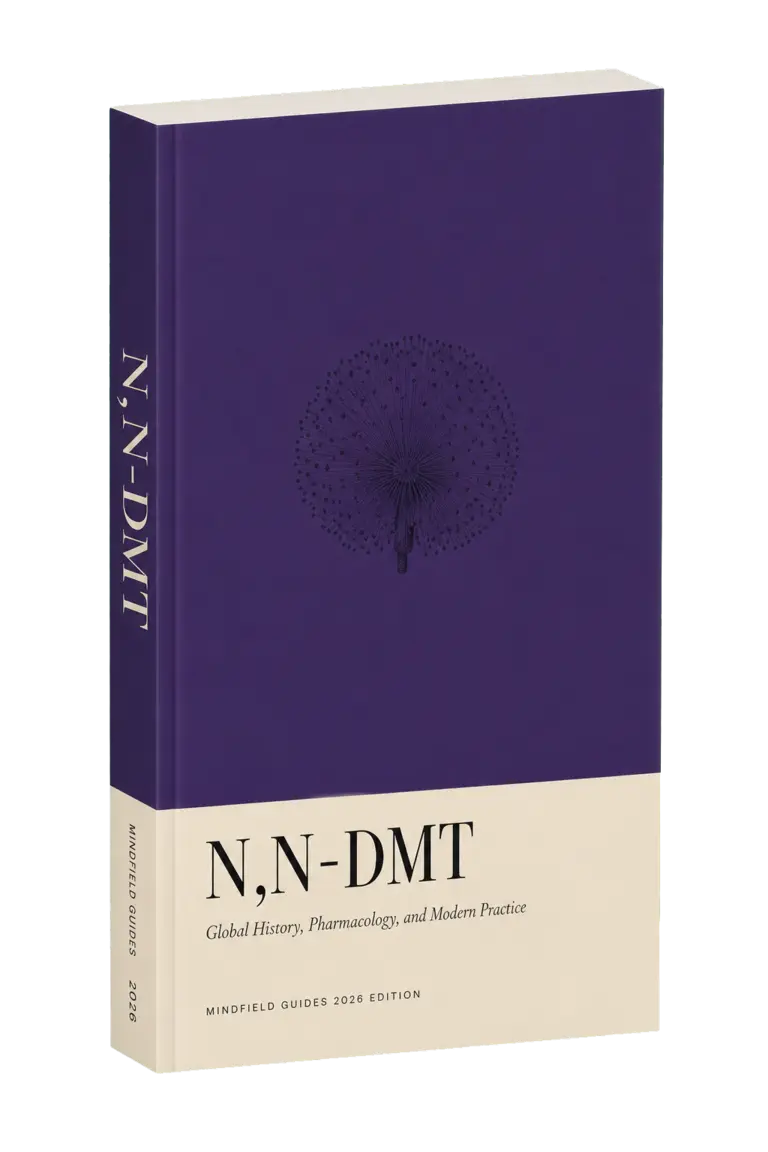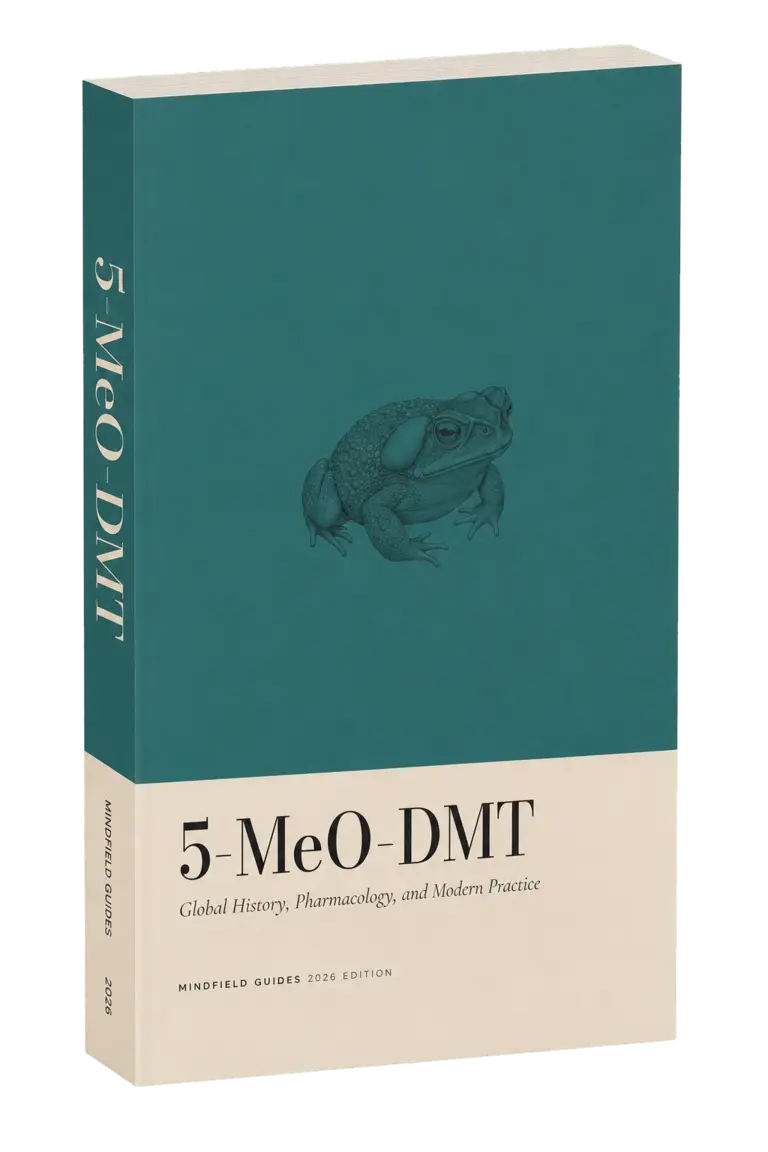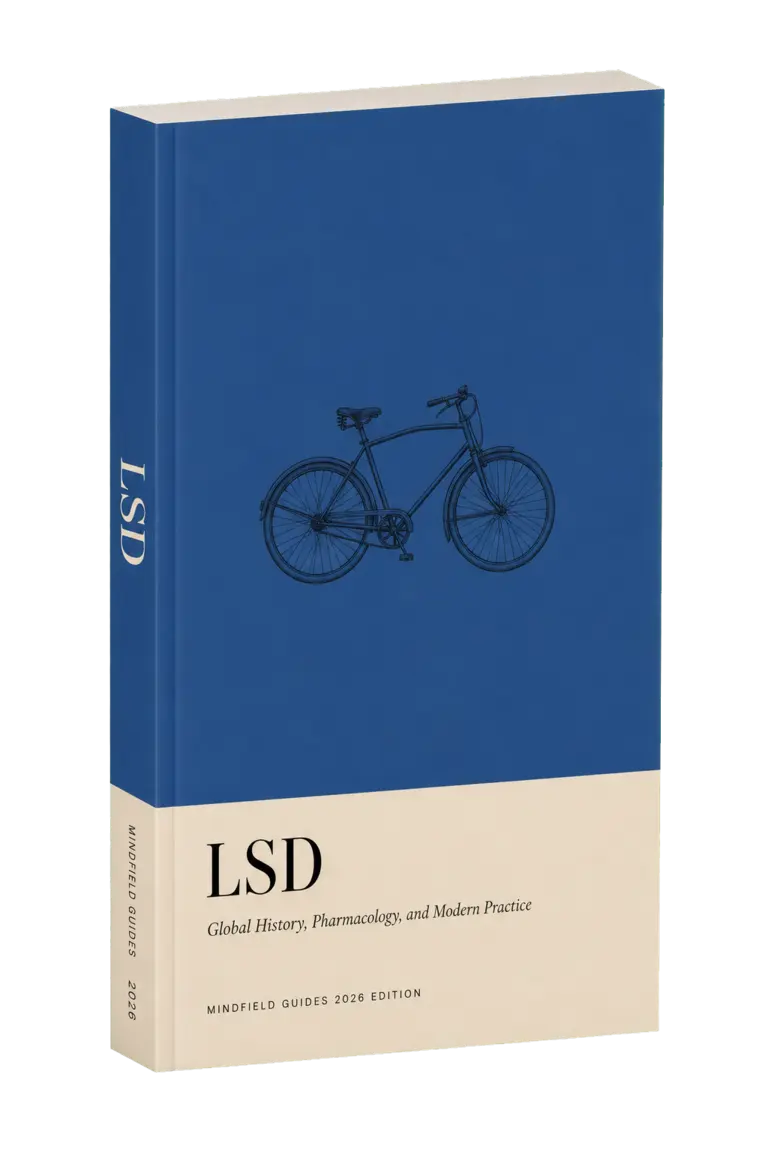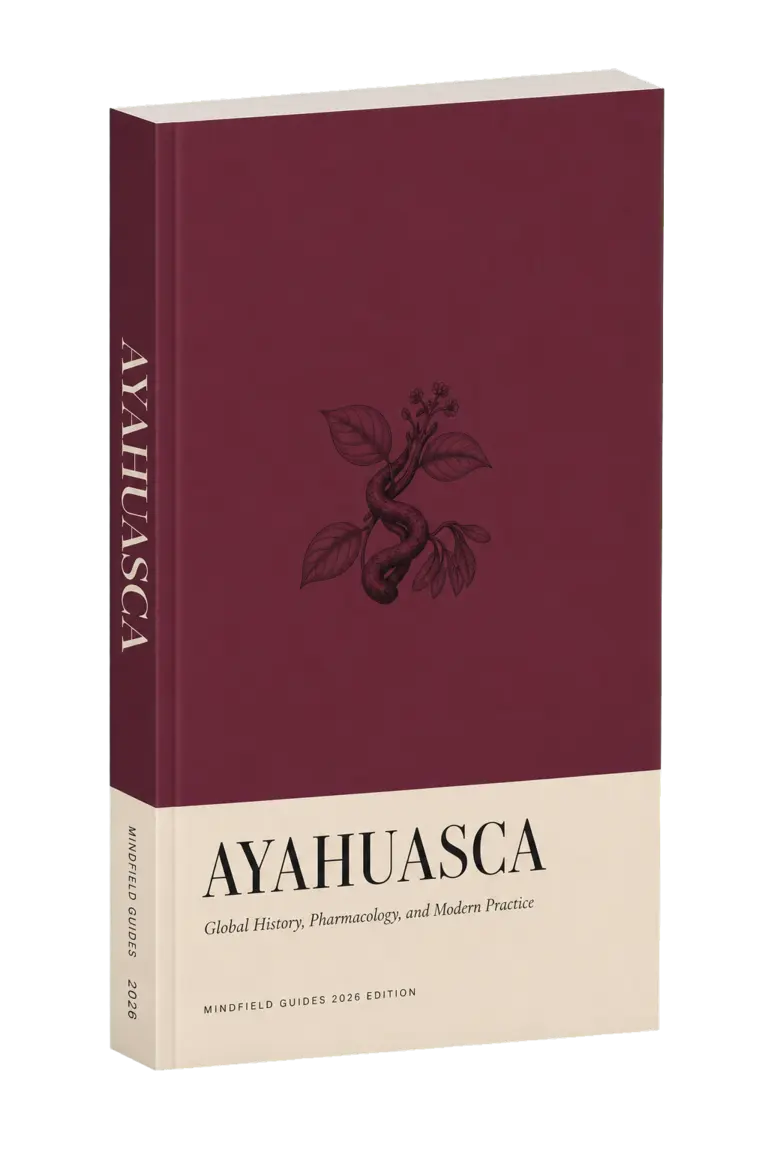
The definitive guide to every major psychedelic for scholars.

Seven volumes available now, more in preparation. Global history, pharmacology and modern practice. Obsessively researched, designed to evolve as the field does.

Browse the seven volumes

Seven volumes, ready to read

Free prepublication editions in EPUB. Choose a book to read about it. Downloads need an invitation code, which you can request here.

In preparation

These volumes are not yet available to download. to hear when each one is ready.

  • Mindfield Guides — Psilocybin
  • Mindfield Guides — Mescaline
  • Mindfield Guides — Salvia
  • Mindfield Guides — Cannabis

Frequently asked questions

What is Mindfield Guides?

A reference series, one volume per major psychedelic substance. Seven volumes are available now: Ayahuasca, Ibogaine, MDMA, Ketamine, DMT, 5-MeO-DMT and LSD. Psilocybin, Mescaline, Salvia and Cannabis are in preparation and not yet available. Each volume is built to the standard of a professional reference: primary sources, full citation lists, and a structure that makes it easy to find what you need without reading cover to cover. The series is designed to stay current as the field moves.

Who wrote this?

AI performed the research, drafted the chapters, and verified every citation against its primary source. A human orchestrated and edited throughout. We’re not hiding the method; it’s central to what Mindfield Guides is. A reference of this scope, updated at the pace the field demands, is what recent advances in AI make possible.

AI makes things up. What makes this different?

The problem with most AI-generated text isn’t the model; it’s the absence of accountability. Every factual claim in Mindfield Guides is anchored to a specific published source. Every citation was run through scite.ai, PubMed, and Semantic Scholar and verified against its primary document before the volume went live. scite.ai alone indexes over 1.3 billion citation statements, comparing each claim to how that paper has actually been cited across the literature. Where a paper couldn’t be independently confirmed, it was cut from the prose. We don’t ask you to trust the AI. We ask you to trust the sources, which are listed and checkable.

For one detailed example of what that looks like end-to-end on a single source — including the framings that were tried and dropped, and the questions that stayed open — see this case study from a recent revision of the Ayahuasca volume. It’s one example, not the whole process.

What does this book owe to the communities this knowledge comes from?

Something real. The fullest answer is several things at once: accurate credit to the indigenous knowledge-holders and scholars whose work this volume rests on, honest representation of the traditions rather than a flattening of them for a Western audience, no claim of an authority the book doesn’t have, and a concrete material commitment.

Ten percent of proceeds from each volume goes to the Indigenous Reciprocity Initiative (chacruna-iri.org), an indigenous-led grantmaking program run by Chacruna Institute that channels funds directly to communities across the Amazon, Mexico, and the United States. The exception is the ibogaine volume, whose proceeds go to Blessings of the Forest, a majority-Gabonese-led organization supporting Bwiti tradition in the substance’s country of origin.

This volume is a synthesis of published research, not an extraction of privately transmitted ceremonial knowledge. That distinction matters and is part of what makes the book legitimate to publish at all. But the underlying knowledge originates with these communities, and acknowledgment without reciprocity has limits. The commitment is unconditional: the percentage gets directed regardless of whether the recipient organization has any awareness of or relationship with this book.

Will community members be invited to review each volume?

Yes. Details to be announced.

How do I get an invitation code?

Codes are free during the prepublication period. Ask for one on the contact page and tell us a little about how you plan to read, and we’ll send it by email. One code works for every volume. Please keep it to yourself rather than posting it publicly.

Is this medical advice?

No. Mindfield Guides is an educational reference. It describes what is known about each substance, including the risks, but it doesn’t recommend taking anything. Several of these substances interact dangerously with common medications, and many are illegal in most places. Talk with a qualified clinician before acting on anything you read here.

In an emergency, call 911. In a mental-health crisis in the U.S., call or text 988. For peer support during or after a psychedelic experience, the Fireside Project answers at 62-FIRESIDE (623-473-7433), daily from 11 a.m. to 11 p.m. Pacific.

How often are volumes updated?

Each volume is on a one-to-two year revision cycle, updated whenever significant new research, clinical findings, or legal changes warrant it. Every EPUB carries a version number. to hear when a new revision goes live.

When will the next volume be available?

We’re not announcing a schedule. When a volume is ready to the standard the series requires, it goes live. to hear when it does.