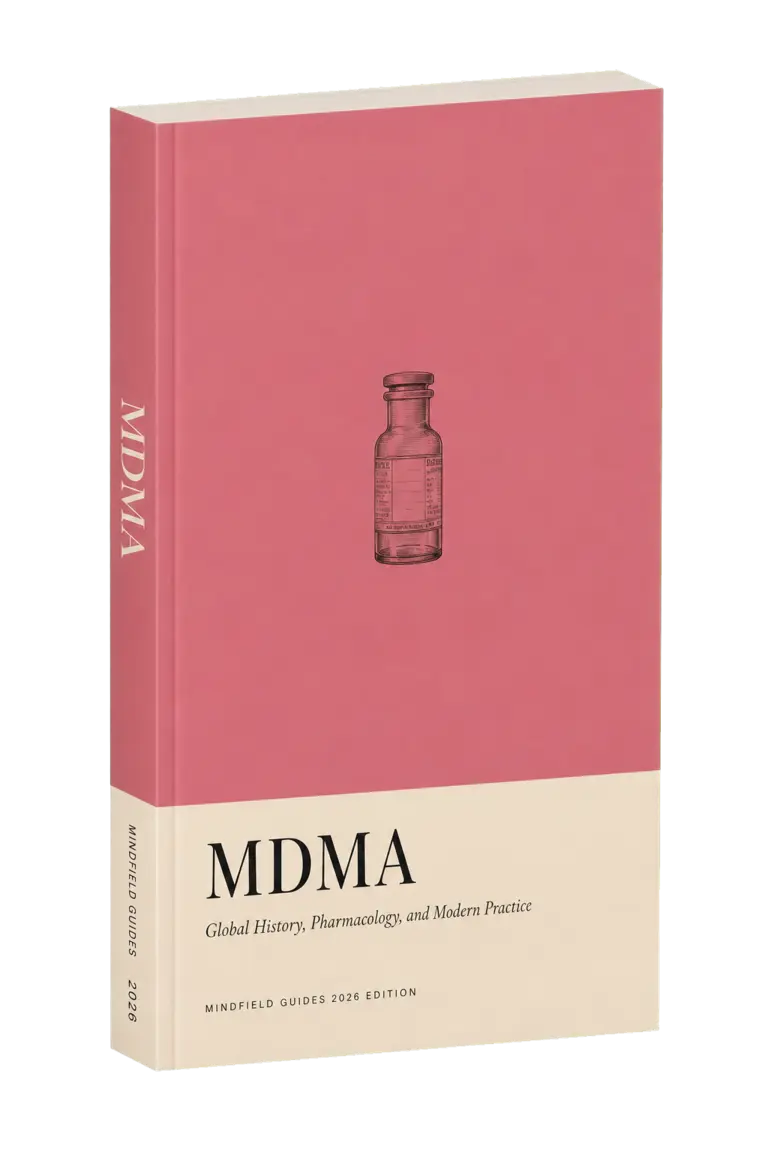
MDMA
Global History, Pharmacology, and Modern Practice
From a forgotten patent shelf to the therapy room and the dance floor.
Prepublication edition v0.23 · EPUB · 441 sources
Downloads need a free invitation code during the prepublication period. Request one.
About this volume
Patented by Merck in 1912 and ignored for decades, MDMA was rediscovered by chemists and therapists in the 1970s, who found that it loosened fear without dissolving the self. The same property made it the engine of rave culture, and the collision between the therapy room and the dance floor shaped everything that followed, including its prohibition.
The volume traces the largest clinical program in psychedelic science: the Phase 3 trials for post-traumatic stress disorder, the 2024 FDA decision that turned them back, and what comes next. It also covers what MDMA does in the brain, the real toxicity questions, and the harm-reduction practices that grew up around its use in the wild.
Synthesized from 441 sources, including the MAPP1 and MAPP2 Phase 3 trials, the Shulgins’ PIHKAL, the testimony of underground therapists and trial participants from the Greer and Mithoefer eras, the 2024 FDA advisory-committee briefing materials, and the monoamine-and-oxytocin pharmacology literature.
Inside the book
- IOrigins · Chapters 1 to 3The substance and its first uses, the lineages that carried it, and the ethics of writing about it at all.
- IIMechanism · Chapters 4 to 6The molecule, receptors, and dose; the brain under the influence; what doesn’t mix.
- IIIExperience · Chapters 7 to 9The arc of an experience, what it is like inside, and when it turns difficult.
- IVMedicine · Chapters 10 and 11The clinical evidence, indication by indication, read closely and without inflation.
- VPractice · Chapters 12 to 15Ceremony, clinic, and solo practice; set and setting; harm reduction; integration.
- VILandscape · Chapters 16 and 17Legal status, the regulatory moment, and the questions still open.