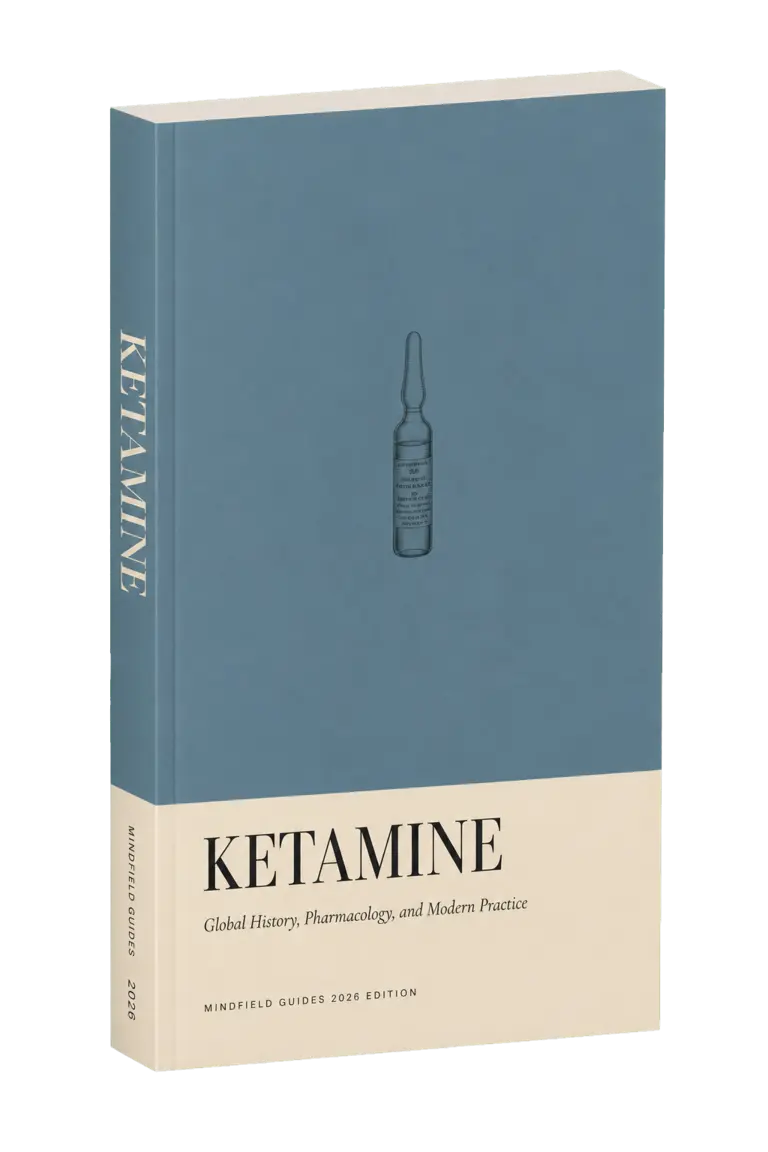
Ketamine
Global History, Pharmacology, and Modern Practice
The anesthetic that became psychiatry’s fastest-moving antidepressant.
Prepublication edition v0.22 · EPUB · 543 sources
Downloads need a free invitation code during the prepublication period. Request one.
About this volume
Synthesized in 1962 and carried into operating rooms and battlefields as an anesthetic, ketamine led a second life as a dissociative on the street before a third life found it: in 2000, researchers reported that a single low dose could lift severe depression within hours. No psychiatric finding of the era moved faster from journal page to clinic.
The volume follows that speed and its costs: the esketamine approval, the boom in infusion clinics and at-home prescribing, the bladder and dependence risks that heavy use makes plain, and the unresolved question of how a drug can be at once a standard of care and a casualty of its own commercial momentum.
Synthesized from 543 sources, including the Berman-and-Zarate antidepressant trials, the Sanacora consensus paper, the AANA and APNA joint position statement, the FDA Spravato label and REMS, the 2026 ACMD review, and the heavy-use cognitive and bladder literature.
Inside the book
- IOrigins · Chapters 1 to 3The substance and its first uses, the lineages that carried it, and the ethics of writing about it at all.
- IIMechanism · Chapters 4 to 6The molecule, receptors, and dose; the brain under the influence; what doesn’t mix.
- IIIExperience · Chapters 7 to 9The arc of an experience, what it is like inside, and when it turns difficult.
- IVMedicine · Chapters 10 and 11The clinical evidence, indication by indication, read closely and without inflation.
- VPractice · Chapters 12 to 15Ceremony, clinic, and solo practice; set and setting; harm reduction; integration.
- VILandscape · Chapters 16 and 17Legal status, the regulatory moment, and the questions still open.